
With the global sustainability agenda being positively embraced by all levels of society, some areas such as fashion tend to be neglected. Every aspect of our collective dressing, buying, and maintaining activities is harmful to the environment, nay crucial. The negative environmental effects caused by the clothing market, especially the fast-paced one, include a high carbon footprint, excessive use of water, and chemical and paint pollution. Even without the environmental issues, the challenges are compounded by the more consumers due to globalization.
Denialism, in this case, will not help. Changing especially our culture and consumerism-related habits will, reduce our fashion carbon footprint on the planet and embrace sustainable fashion lifestyle. In this article, we shall discuss the silk worm and how the silk industry can change one’s dressing habits, stylistically for the better and what steps will such a changes for a person’s dressed silhouette do.
1. Comprehend the Actual Expense of Fast Fashion at its best
In other words, fast fashion seeks to make more clothes and use them in a shorter period to respond to the changing trends. This sounds like a good deal for the customer. However, the real cost is more. There are usually a lot of people who get exploited in the making of very cheap and very fashionable clothes, there are bad working conditions and the environment suffers quite a lot.
As reported by the UN Environment Programme, the fashion industry is accountable for approximately 8-10% of the global carbon emissions and almost 20% of wastewater discharge. As such, these alarming statistics serve as reasons to take a deep breath and seriously put into the consideration the possibilities of ‘no more fast fashion.
2. Capsule Wardrobe — What is it?
Capsule wardrobe is a scope of sustainable fashion; it entails a process where a person picks out some few and simple pieces of clothing that can be worn in different combinations to create several looks. Rather than replenishing and augmenting the wardrobe with a lot of items every season, one buys only a few, select but quality items which are also durable.
When searching for those forever pieces to complete and fill up your capsule wardrobe, do not forget to look for the classic cuts that are always in fashion and look out for the range of colors that can go with most of the dresses. The purpose is to have a collection of well designed and manufactured clothing that goes with your lifestyle and tastes so that one can look good and still be a sustainable fashion.

3. Select eco-friendly textile materials for your clothing
The other element of sustainable fashion is the materials of the garment. Organic materials made from fibers like organic cotton, hemp, linen, or bamboo are environmentally friendly as they are less reliant on harmful chemicals, energy, and water consumption during production compared to the likes of poly or nylon textile.
Here’s a comparison of popular fabrics:
- Polyester & Nylon: These synthetic fibers are durable but not breathable, often causing skin irritation. They also shed microplastics when washed, contributing to water pollution.
- Cotton: Regular cotton is breathable and soft but uses a lot of water and pesticides. Organic cotton is a more sustainable and skin-friendly option.
- Silk: Luxurious, hypoallergenic, and breathable, making it ideal for sensitive skin if ethically sourced.
- Linen: A highly sustainable fabric that’s breathable, durable, and great for the skin. It requires less water and chemicals to produce than cotton.
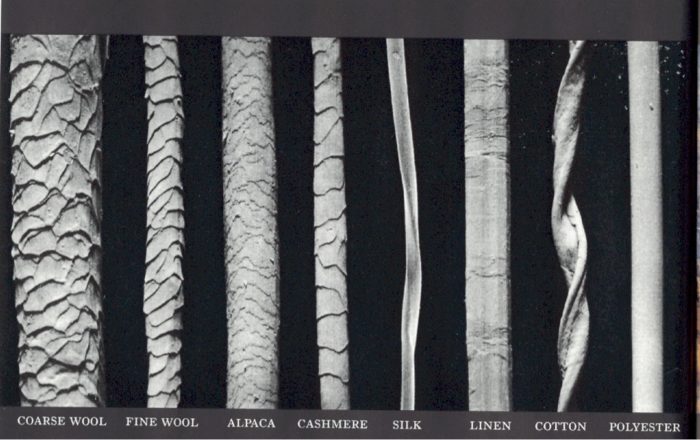
Here you can see a comparison between natural materials such as wool from different animals, silk, cotton, and, at the end, polyester, which is essentially just plastic. It doesn’t have any natural texture, and the material is actually harmful to you. When wearing synthetic materials like polyester and nylon, you are also inhaling microplastics, which can build up in your body. It’s better to choose natural fabrics and pay a little more, rather than allowing microplastics to accumulate in your system.When buying ready-made clothing, opt for these eco-friendly options and ensure certifications like GOTS and OEKO-TEX to verify their sustainability.
4. Ethics and Transparency Are Encouraged in Brand Choices
The emergence of ethical fashion brands has made the process of conscious shopping much simpler. Such brands are committed to sustainable practices in almost all aspects, from the way materials are sourced, produced, and even the employment of skilled labor and less pollution. Most of the ethical brands give information about the clothes, about the people who make them and how those are made.
Patagonia and Everlane and People Tree are among the few brands that have been able to combine fashion with ethics and environmental conservation by offering beautiful clothing that does not compromise on ethics. Always speak from a position of knowledge, buy from ethical companies; those that are not in conflict with your principles of sustainability, social justice, and openness.
5. Be More Open to Thrift Shopping and Buying Vintage
One of the best strategies in reducing the environmental concern of fashion is saving garments by buying used ones. Today, thrift stores and vintage shops are in vogue as they have distinctive absent pieces which are often excellently tailored in contrast to the fast fashion fittings. Whether physically or virtually within applications like Depop, Poshmark, ThredUp, you can purchase and give nice old things a new life.
This cuts down significantly on the consumption of clothing resources as well as reducing waste of clothing items. Moreover, there is almost always a certain degree of charm and originality in vintage or second-hand pieces that is absent in ‘cheap’ bulk manufactured fast fashion items.
6. Mending Rather than Discarding
Do not be in haste to discard and stump issues on the same- a shirt lacking a button or a pair of torn jeans. Rather fix them. A little knowledge of the sewing machine and mending techniques can work towards ensuring that no clothes are wasted and also money is preserved. Taking lessons on how to puppitch the lost seams into place or taking the old clothes into a professional bureau stays the depreciation of wear and tear assets.
If the crafty juices are flowing however, this is another excellent avenue. Take the material from a previously worn dress and make a stunning top, or alter a pair of old jeans into a trendy handbag. Upcycling is very practical not only in terms of helping the environment, but also making it that much easier to personalize one’s decoration which is great.
7. Keeping Your Clothing in Good Condition
Sustainability is also influenced by how we manage the laundry. A high frequency of washing, particularly at higher temperatures, not only causes faster deterioration of clothes but is also water and power consuming. Here are a few simple tips regarding how to prolong the life of your clothes without being harsh on the environment:
- Wash less often: Items like jackets, denim, and knitwear needn’t be cleaned after every single use. Instead clean minor stained areas or use the piece of clothing without washing it to decrease the use of detergent and water.
- Wash in cold water: Most of the time, cold water can clean as effectively as warm or hot water holds and cuts back on energy usage.
- Line dry: Instead of tossing your clothes in the dryer after washing them, hang them up instead. This cuts down on energy and is great at preventing damage to fabrics leading to increased durability of the fabrics.
- Use eco-friendly detergents: It is important that you wash your clothes with washing detergents that are free from phosphates and are biodegradable.
8. Resell or Donate Clothes You No Longer Need
There’s no need to simply toss items from your closet when it comes time to getting rid of them. Instead, sell them, give them away, or trade them with other people. Thanks to online platforms and apps, such as Vinted or The RealReal, it has become very easy for one to pass on these items of clothing to another person, making more room in a wardrobe for other new (or old) pieces of clothing.
If you are not into reselling, you might want to consider giving it away to local charities or people who might need it. Many people also host clothing swap events in their neighborhoods where you can give away your old but still usable clothes and get other people’s old clothes.
Summary: Towards Sustainable Practices in Fashion
Sustainable fashion is also about making choices consciously, understanding the source and production of the garment, as well as the end of the garment’s life. Such practices as ‘buying less but of better quality’, supporting ethical companies and changing how we wear, maintain and throw-away cloths help in minimizing the environmental cost of fast fashion.
Sustainable fashion does not mean we must be perfect, it means we must embrace evolution. The little things count, and together we can help the industries in the transition to an environmentally sustainable one. Fashion is one’s identity—therefore we must ensure it also embraces the quest to save the environment.